
Start wri
Why Most Film Carts Are Designed Wrong
Walk onto almost any film or TV set and you'll see carts everywhere.
Lighting carts. Camera carts. Sound carts. Production carts. They're an essential part of moving equipment efficiently and keeping departments organised.
Yet despite being one of the most used pieces of equipment on set, many carts are surprisingly frustrating to use.
At Hippo Carts, we spend a lot of time talking to crew members across different departments. One thing we've learnt is that the biggest problems on set often aren't the exciting ones. They're the small frustrations that happen dozens of times a day.
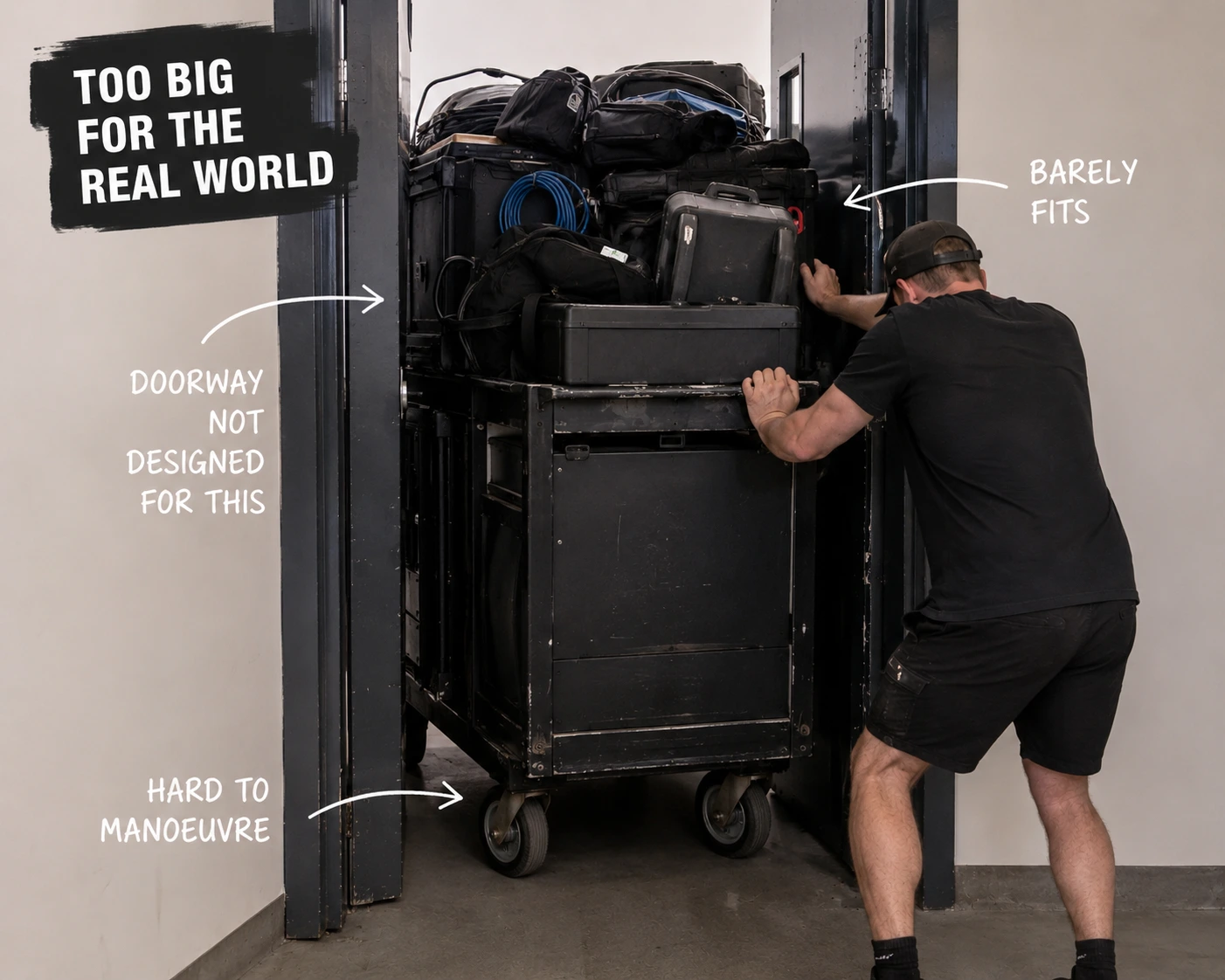
Too Big for the Real World
A cart might look great in a warehouse, but film sets aren't warehouses.
You're constantly navigating:
- Narrow doorways
- Tight corridors
- Packed studios
- Uneven ground
- Cable runs
- Busy crew areas
Many carts are simply too large or awkward for these environments. If a cart slows you down every time you move location, it isn't helping your workflow.
Poor Wheel Choices
It sounds simple, but wheel quality makes a huge difference.
We've seen countless carts fitted with wheels that struggle over cables, vibrate across rough surfaces, or become difficult to manoeuvre once loaded with equipment.
A cart should make transporting kit easier, not become another obstacle to manage.
That's why wheel selection is one of the first things we consider when designing any cart.
Wasted Storage Space
Another common issue is storage that looks impressive but doesn't match how crews actually work.
Deep compartments can become black holes where equipment disappears. Large open shelves often lead to gear sliding around during transport.
The best storage solutions are designed around the equipment being carried, not around arbitrary dimensions.
Many of our bespoke projects start with a simple question:
"What equipment are you carrying every day?"
The answer often shapes the entire design.
Difficult Transport and Storage
One of the biggest complaints we hear is what happens when the day is over.
A cart may work well on set, but then needs to fit into:
- Vans
- Cars
- Stores
- Workshops
- Unit bases
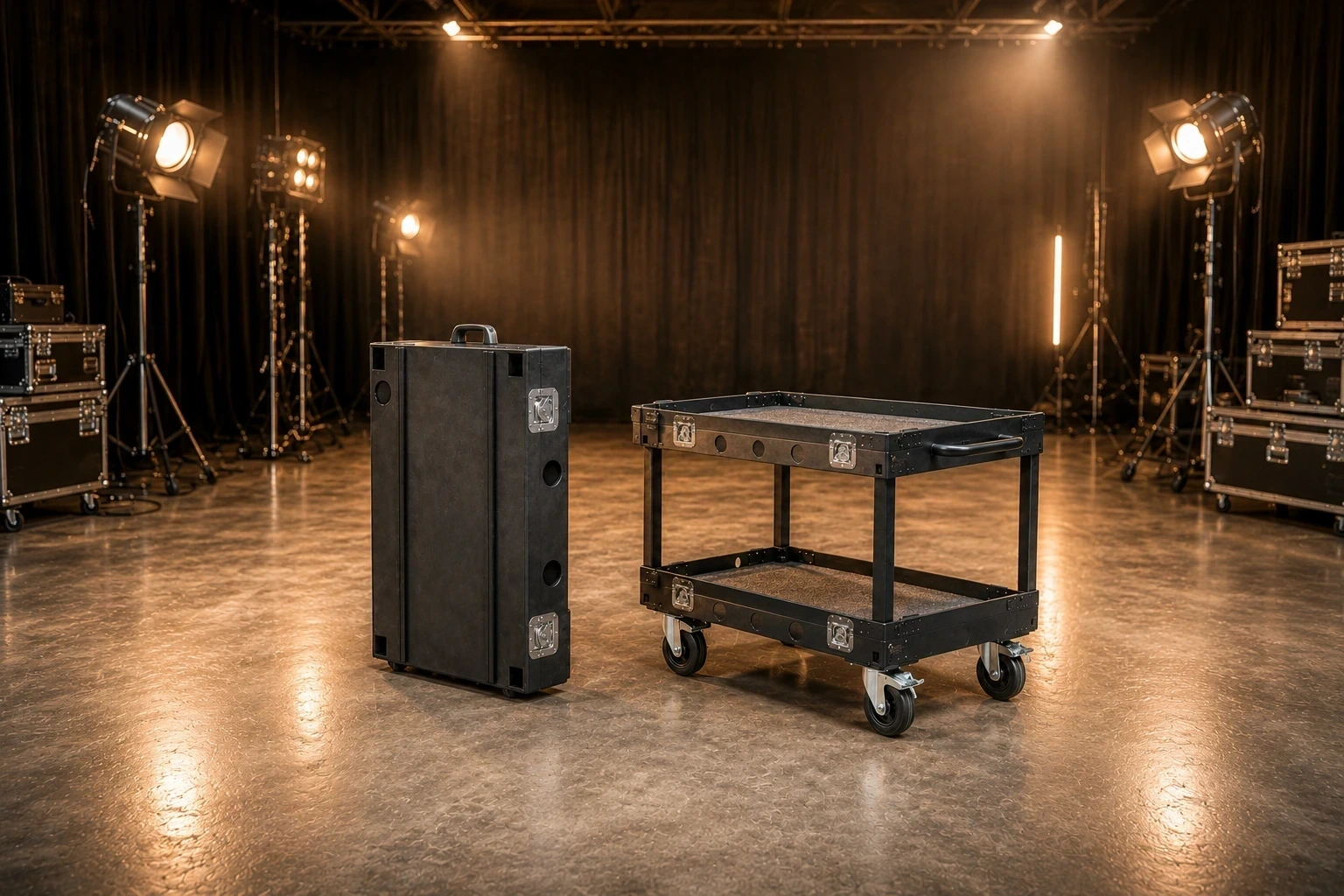
This challenge was one of the reasons we developed our Folding Cart.
Crew wanted a full sized working cart on set, but didn't want to sacrifice valuable vehicle or storage space when it wasn't in use.
Designed by Manufacturers, Not Users
Perhaps the biggest problem is that many products are designed without enough input from the people using them every day.
At Hippo Carts, almost every standard product we offer started life as a bespoke project.
A crew member had a problem.
We designed a solution.
Other crew members saw it and wanted the same thing.
Eventually it became a standard product.
The Tip & Go Cart, Folding Cart, and many of our accessories all originated from real conversations with people working on film and TV productions.
Better Solutions Start with Better Conversations
We don't believe the perfect cart already exists.
Every production, department, and workflow is different.
That's why some of our best ideas don't come from our workshop. They come from crew members telling us about the challenges they face on set every day.
If you've ever found yourself thinking:
"There has to be a better way of doing this."
We'd love to hear about it.
Because the next Hippo Cart might start with your problem.